Wednesday, March 9, 2022

Back at the Table

“We all sit down sometime to a banquet of consequences.”

-      Robert Louis Stevenson


I always imagined three reasons to retire:


1. I wasn’t enjoying the kids anymore and they weren’t enjoying me.

2. I couldn’t get up from the floor.

3. I got a better offer.


In fact, none of the three were my reasons for actually retiring. Mostly it was based on giving more time and energy to my work outside of school while I still had health and vigor, alongside the sense that if a better offer were to come, I would have to close one door before another would open. 


Of course, no dramatic doors have opened. Wynton Marsalis has not called yet to put me in charge of the Lincoln Center Jazz Children’s Program, there are no sponsored tours of my Pentatonics jazz band and Terry Gross has not invited me for an interview to speak about what inspired education looks like. But while waiting for the phones to ring, I’ve taught many satisfying online jazz classes, continued my writing and publishing work, walked and biked more than ever before and so on and so on. 


But most gratifying of all is the way mentoring a fellow Orff teacher has brought me back to teaching classes with kids and last week, I subbed three days with 5th graders (1 or 2 classes a day) and this week, subbed three days at the school’s lower school, kindergarten, 1st and 3rd graders, five classes a day. I suspected I’d be as comfortable with the younger ones as the older and still had the stamina for five classes, but you never know until you know and now I know. I do. 


So with six days of subbing this past week, I felt like I’ve left the pandemic cafeteria where I ate alone in the corner and rejoined the banquet table that I know and love best— making music, singing and dancing with children of all ages. The consequences of my life’s work are simple and delightful — the kids make me happy and I make them happy. 


Who could ask for anything more? Pass the gravy, please. 


Monday, March 7, 2022

The Shelter of Each Other

(Part II of the thoughts about trauma)


When responding to trauma, whether individual or collective, it is a bad idea to live in the basement of the brain. We need to move up into the emotional layers of the cortex and intellectual layers of the neo-cortex and work with the full arsenal of an integrated mind, heart, body to meet the demands of life in all times and life in our particular time, when the stakes feels higher, the clock ticks louder, the interconnectedness is more tangible. On some level, we are all hunkered down together in the basement shelter while the sirens of climate change are screaming, the bombs of the despots’ last stand are dropping and on top of it all, while crammed together, we need to try to stay six feet apart and wear masks that cover both our smiles and frowns and makes our breathing more shallow and prevents us from singing together. 


In speaking about fight, flight and freeze as ineffective, counter-evolutionary, unproductive and deeply harmful strategies, I also recognize all three in myself. On the fight side, my deep anger at those in power who hurt others to protect their own unearned privilege and power, my equal anger at those who support, excuse or cheer them on, my anger at those ancestors who refused their inner work and passed the mess down to us. 


On the flight side, there are times when I simply can’t talk about the news and I let my friends know, times when I can’t bear to hear of the next disaster, times when I retreat into the escape of the next TV series. Sometimes I might even drink a whole beer instead of my usual half! 


And on the freeze side,  there are certainly times when I feel numbed and immobilized by the overwhelming immensity of it all and just shut down altogether. I recognize that all of these strategies in small doses serve their purpose and no one should feel shamed for resorting to them. We’re all doing what we can to get through.


But this I also know. We can’t stay locked down in them for more than short doses. We need to rise up, stick our head out and begin to move forward to a genuine healing, both personal and collective. We need to look each of these traumas in the face, feel the full weight of the pain and the grief, forgive our ancestors and begin to digest that heavy stone in our stomach. We would do well to melt the ice of our frozen selves and keep life flowing, dedicate ourselves to creating in each thought and act a kinder, more beautiful and more sustainable life for our children and grandchildren.


How do we do this? No formula or 10-step program, but many hints and guidelines and encouragements. Here’s a few:


Read: “A book is an axe for the frozen sea within us.” -Kafka 

Go beyond the reading of newspapers into the deeper layers of poetry, history, literature. Read—or re-read— Mary Pipher’s The Shelter of Each Other.


Lean Toward Kindness: Look at what you need to forgive in yourself. Forgive yourself. 

Look at what you need to forgive in others. Forgive others. Forgiveness helps the milk of human kindness to flow. 


Stay together: Consider Gary Snyder’s advice in his poem “For the Children.” 


“… In the next century

or the one beyond that,

they say, 

are valleys, pastures,

we can meet there in peace

if we make it.


To climb these coming crests

one word to you, to 

you and your children:


Stay together

Learn the flowers

 Go light.”


Cry. Laugh.   Trauma is frozen grief. Crying and laughing get it flowing again. 


Make music: Music can be a digestive aide for undigested trauma. The enzymes of artfully crafted and beautifully expressed sounds help break down the solid stone of grief sitting in our stomachs. Watch this video and see if it makes you cry as it did me. See how the organizer and participants aimed their hard work and talent toward a kind gesture to the community. See how everyone was listening as if their lives depended upon it, how it moved the elders, engaged the children, brought everyone together collectively to fulfill its title: Ode to Joy.


This is what it looks like when we offer and accept the shelter of each other.


https://www.youtube.com/watch?v=ceX5jJ5fggs


The Legacy of Trauma

(Yesterday I attended a Zoom class looking at the Ukraine situation through the lens of trauma. It was enlightening, ennobling, inspiring and necessary and like the best classes, sparked off further thinking. Here is my attempt to summarize the ideas that came up for me.) 


Nature knows what it’s doing. The brainstem, that reptilian bottom layer of the brain, mostly knows three things— fight, flight or freeze. In a dangerous world, these are necessary strategies for survival. In the face of danger, we instinctively either fight to protect ourselves, flee from the danger or freeze or hide. In these short-term dangers, our body is flooded with hormones to assist us so we might fight more fiercely or run faster or hide more effectively. When the danger passes, the body re-balances itself, the flood of hormones resumes to a small, steady stream and the animal in us is ready to resume its daily patterns. But the human in us, endowed with memory, imagination and emotion that all reside in the upper regions of the brain, may carry some remembered trauma from the event.  The experience may echo on in nightmares or get triggered by other situations and we may need some help to integrate these extreme emotions so they don’t dominate our consciousness. 


Since they live in our cellular memory, we can’t simply wish them away. They are with us always. But we can grow larger to diminish their hold on us, grow a community of actual people and inner beings that reduce their threat and give us comfort, support and healing. We can respond consciously to the trauma, bring it up into the higher regions of our brain and endow it with the light of understanding and the warmth of a kind of loving acceptance. 


The trouble starts when we stay hunkered down in the basement of the brain, either building bombs, taking drugs or cowering in fear. In short, relying on the short term strategies of the brain stem for long-term solutions. What do each of these look like?


FIGHT: One symptom of the fight response is unrelenting anger, lashing out in situations that don’t call for such extreme responses. Screaming at the car who changes into your lane or yelling at the kids when they spill milk or just carrying around an angry aura that creates an atmosphere for others of constant tiptoeing tension, never knowing when someone is going to lash out. It keeps everyone on guard, unable to fully trust or relax into a situation knowing that the vicious dog of anger may jump out from around the corner and not knowing how long the leash is. 


The anger-response is also a way of projecting all the difficulties in the world out on to groups of people who you label as “other.” The fighter-persona is thus vulnerable to demagogues who blame others for their troubles— it’s the immigrants or the Muslims or the Democrats or the government itself. It excuses people from any self-reflection, from taking responsibility for their own life and inner state. It becomes a means to avoid looking at their own traumas, of which the general trauma is often the way a family, church, school, peer group or overall culture refused to see the person’s potential and inner beauty and ignored them or put them down or bullied them or dismissed them.


 All these people and institutions causing such damage were themselves ignored or bullied or abused or shamed and were simply passing down that undigested trauma. For all the necessary political reactions and analysis of the people who stormed the Capitol, the uninterrupted passing down the baton of unintegrated trauma and then creating new layers is not on the discussion table. These are people who are causing much damage, often gleefully and with the full consent and encouragement of Fox News. But they are also people who need help. While it is imperative that they go to prison for such heinous crimes, nothing will change when they come out unless prisons themselves become institutions of traumatic healing. Which some, like San Quentin, are beginning to consider. 


Whether the puppets of demagogues or the demagogues themselves, the fighter response to trauma is deeply dangerous and destructive, a toxic response that kills, maims and destroys innocent people. Witness the current Ukraine invasion. 


FLIGHT: The flight response causes more damage to the individual than to others, but any refusal to integrate trauma hurts us all. 


One level to the flight response is the attempt to push the trauma away, choose not to think about it or talk about it. Yet both because we cannot control our own thoughts and the trauma is imbedded permanently in our cells, this simply is not possible. It creates an atmosphere in the air of constant tension, the children in the family never knowing what questions they’re allowed to ask. Or quickly learning what topics to avoid. This habit of purposeful denial became (is?) a national habit. In the book, The Black Dog of Fate, the Armenian author tells of how his parents and grandparents never said a word to him about the Armenian Holocaust, theoretically to “protect him.” And then on the other side of the coin, Turkish children were never told about it or told it never happened to protect their own sense of national identity, an identity that couldn’t face its own shame. Of course, our deep silence around the actual brutalities of Native American genocide and African slavery in the United States is part of the fruitless strategy of fleeing from the pain by refusing to look at it or pretending it didn’t happen or whitewashing it into something palatable. 


On a personal level, another big strategy of the flight response is the escape into alcohol or drugs. Watch any old American movie and the moment trouble comes, the hero doesn’t go to the therapist or support group or drumming circle. He goes to the bar. And surprise, when he wakes up hungover, the trouble is still there. Only doubled now if the cycle continues all the way to alcoholism or drug addiction. The statistics of both increasing in our current time of collective trauma is a massive, wide-scale flight- into- oblivion response. 


Naturally, the alcoholics or opiate-addicted or crack addicts are themselves the most affected. But  the damage spreads to their family and friends and colleagues and children and once again, by withdrawing themselves from participating in the healing of trauma, they are allowing it to continue unchecked. 


FREEZE: The third short-term strategy turned to long-term-destructive habit is the freeze response, the sense of being overwhelmed by the sheer enormity of the pain and numbing oneself to be able to withstand it. Such numbness and shut-down manifests as depression, that sense of being unable to move in one direction or another. Aided by denial, the refusal to lift the weight of suffering means feeling helpless as we feel it press down on us. Again, we may resort to drugs as short-term solutions that become long-term addictions or spend hours in the therapists room feeling it all as our own personal failings rather than (or alongside) the collective reality of life under the heaviness of the daily news that we’re all trying to cope with.  At any rate, statistics seem to indicate a rise in diagnosed depression, which at its most extreme can lead to suicide, a statistic also rising. 


Like the flight response, the undigested pain tends to turn more inward and hurt the individual and the surrounding community of family and friends than outward harming innocent people, but again, its dead-end path leads us all away from the healing, both individual and collective, that we need.


What to do? Stay tuned for Part II. 

Sunday, March 6, 2022

Report from a Ukraine Friend

It’s no secret— especially to writers— that the invitation to organize the whirlwind of fleeting thoughts and line them up into some sense of orderly coherence is precisely what brings me back day after day to this Blogpost. But sometimes the wind is so fierce and the thoughts so unruly that there simply isn’t time to bring them into language. Especially not a language publicly shared. 


There is so much to say about the new traumas and insanities leashed by a man of stone wreaking havoc with his heavy shoulders of power that I can simply say nothing at the moment. Except for the realization that these images of tanks and bombs and innocent civilians sheltered or fleeing or dead in the streets is familiar to me in the long-ago-and-far-away world of World War II movies, but not something I ever imagined happening in the 21stcentury. And certainly not to people I know personally. 


Some posts back, I shared some words from a Russian friend who confirmed that these actions were “not in her name.” The other day, I heard from a Ukranian friend and what is heartbreaking to see on the news is tripled by the personal connection. Since I don’t have the words, I’ll let her speak. Take them in, feel the pain, double your compassion and let’s keep working on all levels— financial, politically, spiritually, in the very cells of our body and blood in the heart and nerve pathways in the brain— to stop the madness. 


Unfortunately, the situation is still very difficult. Ð¡ities are being destroyed, bombs are being dropped on my city of Chernihiv. Schools, hospitals, kindergartens and houses of civilians were destroyed. Children and adults are dying. People have been sitting in cellars for 10 days already. I can't even imagine how this will affect future generations. Ð¢hey are now children of war.


We could not even imagine that this is possible in the 21 century. There is no one who has not been touched by this war. Someone lost loved ones, someone lost their home, someone lost their life's work, business. I don't think my studio will be the same either. Unless, of course, it is bombed. My children were evacuated, basically. Everything stopped. 


At the moment I miraculously managed to leave Chernigov. And I'm going to see my son in Warsaw. There is no more music in my head. There is a siren wailing and bombs exploding... I hope I will recover and dream of a speedy end, The support of friends around the world, is very powerful. We are touched to the core! Keep us in your prayers. 

Saturday, March 5, 2022

Swish!

 I never have a moment’s regret about retiring from my school two years ago. My retirement mantra— “I like my boss and I like my schedule”— is holding up. 

At the same time, I was at the top of my game and having just subbed at a school and taught four 5th grade classes, I feel like I’m even one-notch higher, swishing Steph Curry 3-pointers one after another. 


What does that look like in a music class? For me, it means meeting 24 kids for an hour and feeling like you’re old friends, making music from the first second to the last with an uninterrupted, dynamic and engaging flow. Throwing them into the pool and finding out what depth they’re comfortable with, throwing out life vests as needed or retreating to the shallow end of the pool. Reading the crowd, adjusting the pace and the level of complexity, re-focusing some individual kids, checking in with them about their own self-evaluation, balancing imitation and creation. By the end of the second class, each of the two groups recited a challenging tongue-twister accompanied by complex body percussion both in unison and in canon, learned a Slovenian song and improvised dance to it individually and then choreographed a set dance in small groups. 


Most importantly, I can finally recognize the unfocused distraction mostly coming from restless boys for what it actually is— an energy that can be dispersed to create chaos, small or big, both in the class and in the brain and body of the kid or re-focused to both add to the community and organize the brain and body to express itself eloquently. Rather than get upset about it or shame them, I have a new sense of how to re-direct them publicly and talk to them privately. In just one example, a boy who was purposefully singing too loud and fussing with the kid next to him did a fabulous dance move to the song. I stopped the class for a moment, asked him to show the motion again, have everyone copy it and thank him for his great idea.


Unlike basketball, the elder music teacher need never retire, can keep improving in a thousand ways, infusing each activity with a deeper understanding of its purpose, how to engage the kids as a group and help each kid discover how music can integrate their impulsive energies and lead them to their own power of expression. 


Like basketball, not every shot goes in. Unlike basketball, when it does, the swish brings happiness to all. No opposing team that loses. We’re all in the game.

Wednesday, March 2, 2022

The Wood Wide Web

“Mats of mycorrhizal cabling link trees into gigantic, smart communities spread across hundreds of acres. Together, they form vast trading networks of goods, services and information…”     

                                                            - Richard Powers: The Overstory (p. 218)


Peter Wohlleben, author of The Hidden Life of Trees, calls this phenomena “the wood-wide web” and in an interview with Smithsonian Magazine, describes it thus:


“All the trees here, and in every forest that is not too damaged, are connected to each other through underground fungal networks. Trees share water and nutrients through the networks, and also use them to communicate. They send distress signals about drought and disease, for example, or insect attacks, and other trees alter their behavior when they receive these messages.


Scientists call these mycorrhizal networks. The fine, hairlike root tips of trees join together with microscopic fungal filaments to form the basic links of the network, which appears to operate as a symbiotic relationship between trees and fungi, or perhaps an economic exchange.”


Isn’t that interesting? Indigenous peoples living close to the earth have long suspected the same, though with a different language and more direct spiritual connection. Jung talked about something similar in his notion of the collective unconsciousness, a shared sentience between human beings arising in myths and stories, psychological breakdowns and breakthroughs. The World Wide Web made the connections between people literal, but no mere signals through wires or wireless changes the content of what we share. 


Buried somewhere amidst these various connective systems is the feeling that some of us have about being more intimately connected with each other than we ever have before. The unthinkable (a mere three years ago) of a world-wide pandemic in which not a single continent was spared, the warning signs of severe climate change arising everywhere, have linked us together in new ways. Alongside the more positive signs of people waking up determined to bring more kindness, compassion and justice into themselves and the world as large. Yes, there is Putin and the Republicans and other regressive de-evolutionary sub-humans purposefully missing the memo, but those tuning into the invisible (and visible) threads connecting us feel both the pain and the excitement of such connection. Suddenly what is happening in Ukraine is not just casually dismissed as something far away, but it is intimate and close to us all, a distress signal passed along the psychic mycorrhizal network alerting us all to change our behavior. 


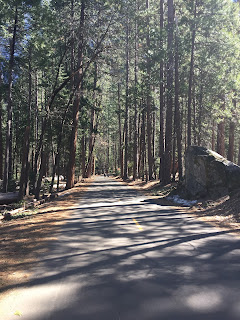
Having just spent time with the ponderosa pines and white firs and incense cedars and other beautiful tree-beings in the Yosemite Valley, there’s no question of their superior intelligence in many areas. None of them read tracts about White Fir Superiority or insult the lowly live oak tree or get their water in plastic bottles. So why not follow their lead, humble ourselves down to the mycelium level and strengthen our “gigantic, smart communities spread across millions of acres and form vast trading networks of goods, services and information.“ And love. 


To our comrades in the Ukraine, we ache for you, feel your suffering from a distance and send the food of love to nourish your roots and keep them strong. 


Tuesday, March 1, 2022

Not In Our Name

Back in the Bush years, I often felt embarrassed to be an American traveling around the world. Little did I know how much worse that would feel when 2016 hit. But in all those travels, I never felt anyone blame me personally, as the people I came in contact with understood that our politicians don’t necessarily reflect the people. What felt good to me was for me to publicly acknowledge that there were (are) millions like me who were doing their best to resist, to protest, to educate, to let the politicians know that the things they were doing were “not in our name.” 


In this moment of time when I’m feeling happier about some of the representation in my country, things are falling apart in other lands. I received an e-mail from someone in the Russian Orff Society as follows: 


Dear colleagues and friends! 


I am against the war. Hundreds of my friends and 1000’s of people here are against the war. 


Majority of Russian people don’t support war and forced to fight the war against their will. 


However we are still ashamed and feel responsible for it. 


We are not enemies to each other and want peaceful honest life. 


#stopwar 


And I wrote back:


Thank you so much for your important message in these hard times. I, too, have felt so ashamed during the four years with Trump, so it's important to remember that the people of a country are often separate from their politicians and important to let others know that there is a movement of resistance. So thank you for the reminder. 


I was scheduled to teach in Russia and then Ukraine in Fall of 2020 and could do neither because of the pandemic. But I did do each as an online course and felt the same beautiful spirit in each country, the same I've felt in every country where good-hearted people dedicate themselves to bringing happiness, beauty and kindness to children in hopes of a more peaceful and harmonious world. Please know that we support you and our dear colleagues in the Ukraine in hoping for an end to this madness. My own grandparents came from Belarus, so I also could feel some ancestral shame. 


But the only shame is in agreeing to continue the hatred and greed. Let's each of us do what we can to teach ourselves and the children that we are all deeply connected, negatively through the lessons of the pandemic and climate change, positively through the music, dance and love we share with each other.


Stay strong and may peace prevail!