Tuesday, February 15, 2022

TGAL

“Think globally, act locally.” In our acronym, soundbyte-world, I thought I’d try that out as a reminder to us all. Especially me. “Think globally” is my default setting and I can turn the simple smallest experience— a kid learning to skip in music class, a delicious soup with perfectly blended ingredients, a game with beanbags balanced on the head— into a formula for world peace and harmony. I can critique whole civilizations with a turn of a phrase, try to reveal to the million non-readers of this Blog what they might consider to live with more happiness, kindness and compassion, draw invisible lines against insidious political forces that I vow not to cross. 


But in the past two weeks ago, I took part in two delightful local actions regarding Golden Gate Park, the big backyard a half-block from my house that I enjoy daily while someone else takes care of it. The first was a neighborhood work-day at Kezar Triangle, the little spot of park that is the entrance to the grander paradise that I walk through every day. Mostly it is a gathering spot for dog-owners, so I don’t actually hang out there much, but appreciate it as a lovely doorway into my daily walk or bike ride. 


I’m proud to report that my wife Karen independently conceived of, organized and co-led with a Park gardener the event and got some 25 volunteers working for three hours to take care of and help beautify this tiny spot of land. The work was mostly picking up litter, weeding, moving mulch, breaking down an outworn fence and such. Simple tasks without dramatic effect, but left the space at the end just a little bit better than it was at the beginning. While promoting good neighbor relations and giving my daughter Talia and I a new way to talk while we weeded. Now when I pass through, I can see the tiny footprints of our helping out.


Then on Saturday, another neighbor organized a rally to keep JFK Drive in the park car-free. This spot of road has long been car-free on Sundays, but during the pandemic, closed every day of the week and was a constant river of walkers, joggers, roller-bladers, bikers, skateboarders and beyond. Now the City Supervisors are considering re-opening it to cars and with my neighbor’s efforts, some two to three hundred people gathered to let it be known “No, thank you. We prefer it as it is.” There were some Chinese Lion Dancers, two supervisors and others who spoke and at the end of the speeches, as we got ready to walk, I led the group in a song I made up for the occasion. (I had met this neighbor when I created the Pandemic Neighborhood Sing that I continued for two years, so she had suggested that I create a song for the rally). The whole event was festive, again an opportunity to build community and an invitation to come out of the pandemic with renewed determination to continue the things we all enjoyed— less car traffic, more walking or other self-propelled transportation, more time out in the park with trees and grass and cawing crows. 


The threat of climate change, of encroaching fascism, of an ongoing pandemic, is an enormous Goliath that few of us little Davids have the capacity or strength or strategy to bring down. But to pull out some weeds and walk to keep a road without cars, that I can do. And if thousands or millions or billions commit to simple local acts based on community and stewardship and intelligent education, why, they can add up to something enormous that can meet the giant with sufficient strength. TGAL, people!


PS My little song below, sung as an echo with the group: 


1) I don’t know, but I heard some say (group echoes each line) 

They want cars back on JFK

So we are gathered here today

To stand together and say “No way!”


CHORUS:And so we’ve come together, you, you and me

To keep JFK (clap) car-free!

To keep JFK (clap) car-free!


2) We love this space to take a walk 

And hear each other when we talk

We love this road to ride our bike

Skateboard, roller blade, take a hike.


CHORUS


3) We’re using too much fossil fuels

That’s what we teach the kids in schools.

So here’s a chance to mean what we say

Keep a car-free JFK.


CHORUS

Monday, February 14, 2022

And So It Began …

Today’s Facebook memory from two years ago to the day:


With courses cancelled in Hong Kong, Macau and Bangkok, flying home early from Singapore. Grateful that I was able to teach six different two-day courses here without getting shut down. 14-hour flight ahead, looks like I'll be able to see the plum blossoms in San Francisco after all. Meanwhile, heartbreaking news about the continued spread of the virus— sending healing thoughts to China and beyond.


Little did I knew what lay ahead and how “beyond” would come to my doorstep, to everyone’s doorstep around the world and stay so long beyond its welcome. It seems to be finally packing its bags and we’re all hoping that some distant cousin doesn’t suddenly show up and move in. 


Maybe someday I can finally teach those courses in Hong Kong, Macau and Bangkok.

Saturday, February 12, 2022

Sunrise, Sunset

No, this isn’t about the music from Fiddler on the Roof.  (Which incidentally, is one of the few Broadway plays my parents took me to as a kid. My father had taken some art classes with Zero Mostel and Zero graciously invited our family backstage. I loved the play and enjoyed meeting the first famous person I had ever met. But I digress.)


After yesterday’s justifiable and necessary outrage, I needed to take some deep breaths and see if I could arrive at a more hopeful state of mind. I do feel like the extremities of these reactions by scared people trained to project their fear outwards is the last gasp of a dying breed, a mentality that has no place in a future that is not only sustainable, and kinder and more intelligent, but is an actual future for the human species. We are in indeed, as poet Matthew Arnold puts it,  “wandering between two worlds , one dead, the other powerless to be born.” In the best scenario, we will bury the dead and turn our power to the living. 


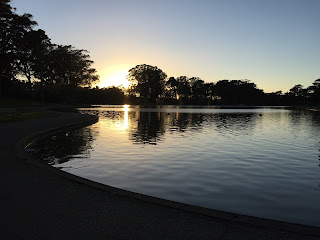
So one poetic image is the sunset of the previous world (much more beautiful and gentle than what is actually happening) and the sunrise of the one we hope to welcome. So I’ll let these two images speak for themselves, the first a sunset from Spreckel’s Lake in San Francisco’s Golden Gate Park (actually taken on New Year’s Eve) and the second a sunrise from the West Point Inn on Mt. Tam in Marin (the same place the “cover” photo of this blog shows). Let these images guide us forward.


Friday, February 11, 2022

WTF?!!!

This just in on a mailing I was sent:


“Last week—just days after a Tennessee school board banned "Maus," a Pulitzer Prize-winning graphic novel about the Holocaust, from being taught in schools—a church in the state held a book burning. Footage from the event shows hundreds of people gleefully tossing books deemed "demonic" into the fire.”


 Is anyone else alarmed by this? Book-burning? (One of which was “Harry Potter” for its witchcraft.) Haven’t we seen enough films about the Nazis to know that this is not a good sign? 


Now add to that the statistic of the murder rate doubled this past year, disturbing incidents on planes increasing from some 400 in 2020 to over 4,000 in 2021, a recent crime wave of car-jacking in New Orleans and small mobs in San Francisco (my home town!!!) running into and looting department stores, alongside the 14 states shutting down teaching our actual history in schools and blatantly shutting down voting rights and all I can think to say is  WTF?!!!!!!

It’s no secret that our country and the world is in crisis on all fronts— the pandemic, climate change, the attempt to dismantle democracy— but I’ve been happily following Michael Meade’s suggestions that crisis is opportunity. We have a choice to become smaller people or larger souls and yes, there is ample evidence on the larger soul front. People taking time to educate themselves about systemic racism, environmental destruction, using the pandemic to sort out the essential from the frivolous and re-connect with art, with beauty, with nature, with each other. But it feels like the tipping point toward hope is being pushed back to despair as Nazis march in Orlando with the consent of the governor’s silence, big-name criminals whose names rhyme with “rump” and “hates” and "duelie Donny" are still afoot and not in jail. And looting in San Francisco? What are you thinking, people?


This much I know. The brain is programmed to fight, freeze, flee or feed when confronted with danger and that’s a useful survival skill. But when it stays locked in that mode during times of more drawn-out dangers, it’s good for exactly no one. The fighters are storming the Capitol, the freezers are locked in depression and vulnerable to suicide, the fleers are binging on Netflix and video games with their heads in the sand and the feeders are growing obese with potato chips. When we are in that lower region of the brain, we neither have access to the heart’s more nuanced emotions nor the brain’s capacity of intelligent thought. People dancing around fires with the books burning they tossed in are terrified and purposefully choosing to shut down all thought, not only their own, but trying to impose their chosen ignorance on others. This is not a good thing.


Meanwhile, those who are digging deeper into the truth of privilege, doing the reading, watching the documentaries, having the courageous conversations with both themselves and others, owning their fears real and imagined and doing the work to move beyond them, are the last hope we have for both survival and beyond-survival to the long-deferred better world we deserve. We really have only two choices— be taken down by our fear or lifted up by a firm faith in our human potential. 


Nazi rallies, car-jacking, store looting, book-burning, voter suppression, closing down thought in schools, letting all our wild dogs loose into a lawless Gotham City— what is going on here?!  In my experience, when crisis visits people in the form of illness, bad fortune, a death in the family, when a house is lost to fire or a neighborhood is ravaged by a storm, the people I know lean more towards helping, towards kindness, towards compassion. Can we please take that path, dear fellow citizens? For all of our sakes.

Thursday, February 10, 2022

Life in Serial Form

I just finished Jonathan Franzen’s epic novel Crossroads. Though well-written and engaging, I must confess that I grew weary of hanging out with its dysfunctional family, its members obsessed with God, dealing with drug issues and struggling with their own mental health. Yet when in an interview with the author, he reveals that this is the first of a three-part series, I knew that I would read the next one, curious as to what had become of Perry and Judson, Becky and Clem, how Russ’s new ministry was going, whether Marion’s new-found healing held and if Rick Ambrose was genuinely good or whether he finally got brought down by a sex scandal. 


My new read is the third in a series of four novels by Elin Hilderbrand, having enjoyed another series of three that she wrote. Back in the living room, the Swedish TV serial Bonus Family gives me something to look forward to in the evening. All of this got me thinking about the power and pleasure of the serial. 


Time at its best may be one eternal ever-cycling present moment, but we humans are forever in the parade of its linear march forward and it’s both comforting and engaging to have an ongoing thread that develops and changes through time with familiar and knowable themes and characters. I’ve always loved movies, but these days, in-between the serial TV show of the month, when I see a movie, it feels such a short time to get to know the characters! Still a good movie is a good movie, but if I watch another one the next night, there’s a certain labor in getting acclimated to the new story and people and setting and theme. I find myself preferring the long-term commitment a few seasons of a show provides.


As with films or books, so with life. I remember the feeling of my first class each year teaching three-year olds, looking at each child and thinking, “I hope we’re going to like each other, because we’ve got 11 years ahead of us!” And then in the blink of an eye, there I am giving a graduation speech for one of those kids who sat in that circle, often with their 8th grade self at eye-level or even looking down at me. Always the feeling that this has been quite a serial drama watching them grow and develop— and maybe for them watching me as well! 


So it has been with just about all aspects of my life. The serial drama of waking up next to my wife over the past 48 years, life in the school where I walked the halls for 45 years, my children now 37 and 41 years old, people in my men’s group turning 80 after 32 years together, my grandchildren now 10 and 6. All of us characters in the grand serial drama, forever changing and growing and developing and evolving and staying the same. 


And me hoping the show will last for many more seasons, curious as to how it will turn out. 


Tuesday, February 8, 2022

The Vocation of Eloquence

What is writing but our attempt to re-articulate what has mostly been said before in forever new ways? If our vocation is eloquence, it is firmly built upon the heightened speech of others who have made the same climb up the ladder of cultivated intelligence. People like Canadian English professor Northrop Frye. The mark of a good author is that we are astonished anew by his revelations when we turn to read them years later.  I recently re-opened his book The Educated Imagination, published in 1964, and based on six talks aired on the radio (a kind of pre-Podcast lecture series). I was mightily impressed by the depth of his thinking and his power of articulation. 


So here I present select passages from his final talk titled The Vocation of Eloquence. Much delicious and nutritious food for thought— enjoy the meal!


• Literature speaks the language of the imagination and the study of literature is supposed to train and improve the imagination. We use our imagination all the time… the choice is between a badly trained imagination and a well-trained one. 


• The fundamental job of the imagination in ordinary life is to produce, out of the society we have to live in, a vision of the society we want to live in… and how to relate the two. 


• The first thing our imagination can do for us when we learn to read and write and talk, is to fight to protect us from falling into the illusions society threatens us with. Those illusions are produced by the social imagination, but it’s an inverted form of imagination, What is creates is the imaginary which is different from the imaginative.


¨• If our only aim is to get by in society, our reactions will become almost completely mechanical. That’s when we resort to clichés. Clichés are the ready-made, prefabricated formulas designed to give those who are too lazy to think the illusion of thinking. 


• In a society which changes rapidly, many things happen that frighten us or make us feel threatened. People who do nothing but accept their social mythology can only try to huddle more closely together when they feel frightened or threatened and their clichés turn hysterical.


• The study of language and literature is essential to free speech. We are in a battleground between the speech of a mob and the speech of a free society. One stands for cliché, ready-made ideas and automatic babble and leads us inevitably from illusion into hysteria. There can be no free speech in a mob. 


Nobody is capable of free speech unless he knows how to use language and such knowledge is not a gift; it has to be learned at worked at, like practicing the piano. 


• There’s something in all of us that wants to drift toward a mob, where we can all say the same thing without having to think about it, because everybody is all alike—except people that we can hate or persecute. Every time we use words, we’re either fighting against this tendency of giving in to it. When we fight against it, we’re taking the side of genuine and permanent human civilization. 


• The civilization we live in at present is a gigantic technological structure … it looks very impressive, except that it has no human dignity. For all its wonderful machinery, we know it’s really a crazy ramshackle building and at any time may crash around our ears. We are living in a modern Tower of Babel and what will make it collapse is a confusion of tongues. 


All had originally one language, the myth says. That language is not English or Russian or Chinese—it is the language of human nature, the language that made both Shakespeare and Pushkin authentic poets, that gives a social vision to both Lincoln and Gandhi. It never speaks unless we take the time to listen in leisure, and it speaks only in a voice too quiet for panic to hear. And then all it has to tell us, when we look over the edge of our leaning tower, is that we are not getting any nearer to heaven, and that it is time to return to earth.


Thank you, Northrop Frye. The difference between clichés and genuine free speech, between the imaginary (conspiracy theories!) and the imaginative (art), the need to cultivate and educate the imagination (pay attention, schools!), to listen in leisure (the gift of the pandemic), the inability to truly listen in a state of panic and hysteria and the need to plant our feet firmly on the earth. Good reminders for us all, some 60 years after you spoke them. 


If this was my 5th grade book report, I’d end with: 


“I recommend you read this book.”

Monday, February 7, 2022

The Limits of Numbers

“Not everything that counts can be counted. Not everything that can be counted, counts.”


Have you noticed how numbers are taking over the world? How quantity supersedes quality? How our sense of self is driven by Facebook likes and sense of public service by poll numbers? Has it struck you that people’s opinions have never been asked for more and yet we have never done less to prepare them to make an intelligent assessment? How what people think about what you’re doing is more important than the integrity of your actions? And don’t get me started on IQ and numerical grades as an assessment of intelligence. 


I’m trying to imagine Dr. King’s checking his poll numbers before deciding to march on Selma. Gandhi asking his Facebook friends if they think he should fast or not. Mozart trying out his new composition online to get public opinion about whether he used too many notes. 


We might note that Jesus had only 12 followers. By today’s standards, what a loser!


PS On a scale of 1 to 100, how would you rate this post? I’m trying to figure out what to write tomorrow.